Keeping Turtles
Keeping Turtles
From the meaning of basking to tank sizes and tank mates — the basics of sharing a few decades of your life with a turtle.
Keeping Turtles
From the meaning of basking to tank sizes and tank mates — the basics of sharing a few decades of your life with a turtle.
Sizes and lifespans are rough guides — see each species page for details.
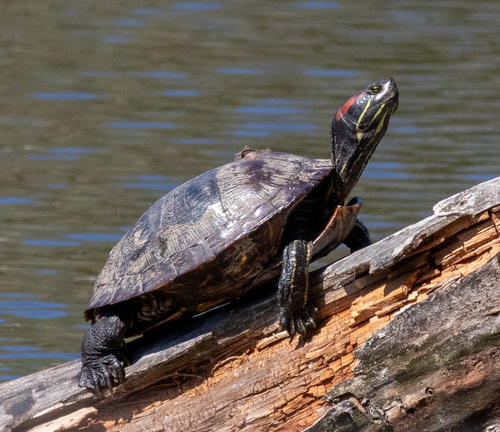
Hardy and forgiving — the classic starter turtle. In Japan it is now a regulated invasive species: keeping one is legal, but releasing or selling one is not. Commit for the long haul.
Turtle Species →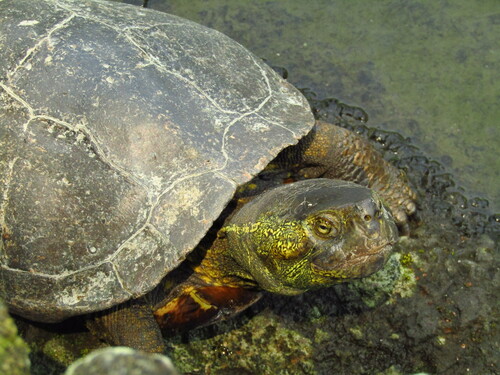
Said to tame readily, and well suited to the Japanese climate. Active and fun to watch.
Turtle Species →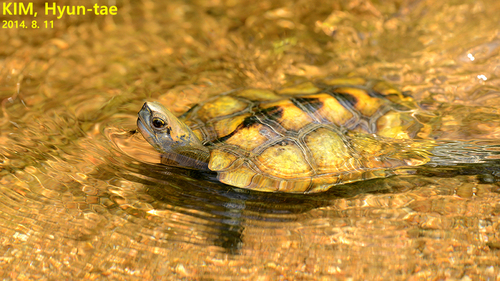
Japan's endemic turtle. Somewhat sensitive to water quality, so change water often — and choose captive-bred individuals, as wild populations are declining.
Turtle Species →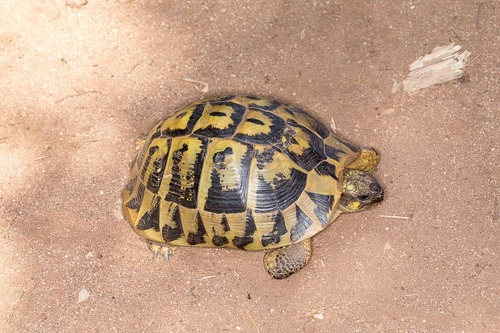
The classic first tortoise. Vegetables with calcium support, UVB light, and diggable substrate are the pillars of its care. Walking is its job — give it floor space.
Turtle Species →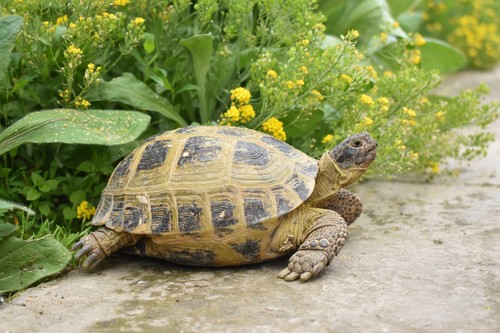
A champion digger built for dry climates. Provide deep substrate to burrow in, and guard against humidity during Japan's rainy season and summer.
Turtle Species →Turtles live a very long time. Pond sliders and Reeves's turtles commonly reach 20–40 years; tortoises can pass 50. A turtle bought in childhood may end up living alongside your own children. Keeping one is a promise measured in decades.
And if you ever cannot keep it: never release a turtle into the wild. In Japan, releasing red-eared sliders has been illegal since 2023 under the invasive species law (keeping one at home remains legal). Even native species carry diseases and genetic disruption into wild populations when released. If you truly cannot continue, consult your local government, the shop, or reptile adoption networks.
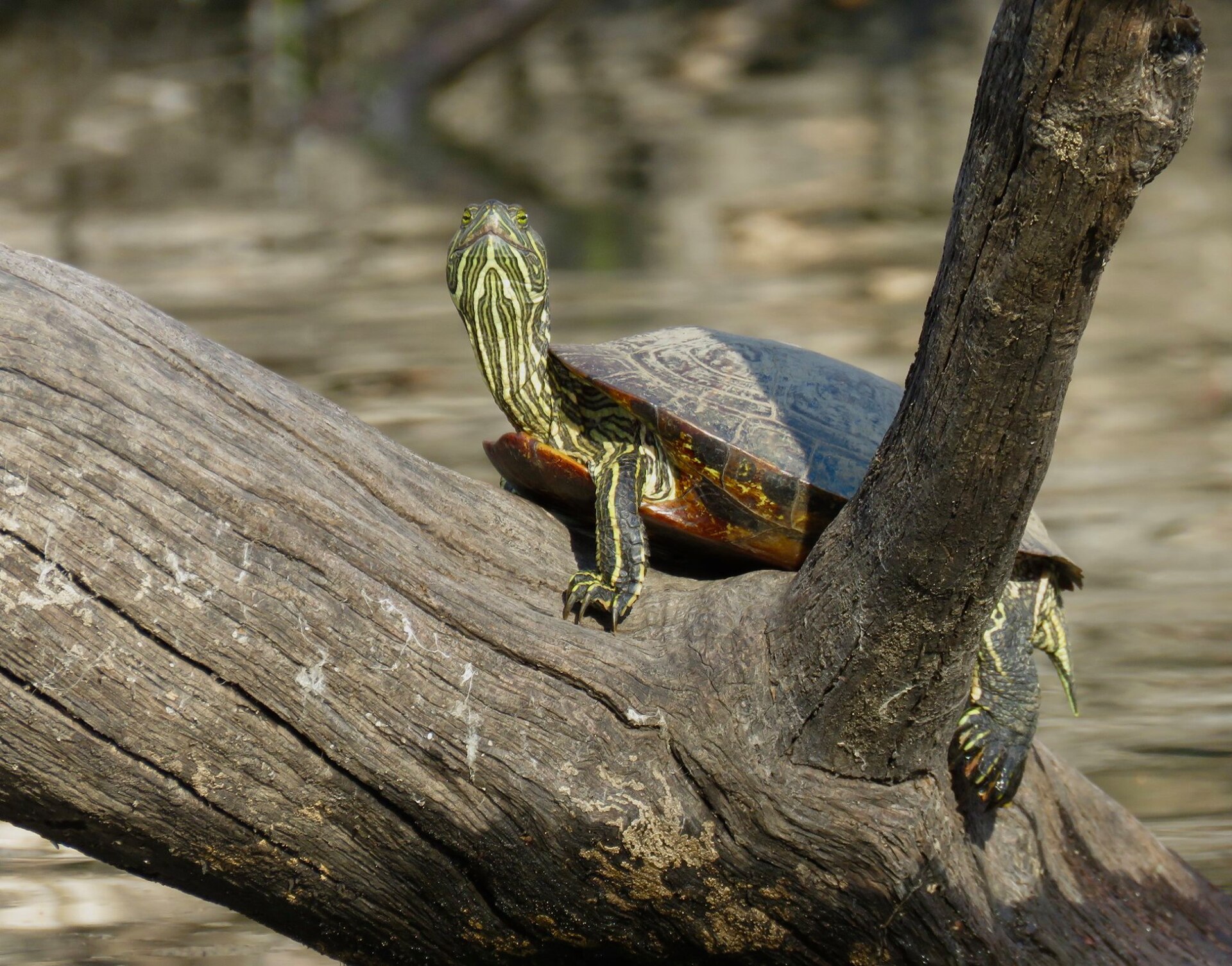
For aquatic and semi-aquatic turtles, home means water plus dry land. As a rule of thumb, the tank should be at least five times the shell length wide. Hatchlings are small, but turtles grow — always check the adult size before you buy.
Keep the water deeper than the shell is long (in shallow water, a flipped turtle may not be able to right itself). A fully dry basking platform is essential. Even with a filter, regular partial water changes are the norm. And turtles are astonishing escape artists — respect the lid.
A turtle sitting motionless on a rock is not being lazy — it is working. Basking raises body temperature to power digestion, dries the shell and skin to keep them healthy, and delivers the UVB needed to synthesize vitamin D3 for calcium metabolism.
Indoors, that means both a heat lamp and a reptile UVB lamp over the basking spot. Sunlight through window glass loses almost all of its UVB. For outdoor sunbathing, always provide shade to retreat to — midsummer sun can be fatal in minutes.
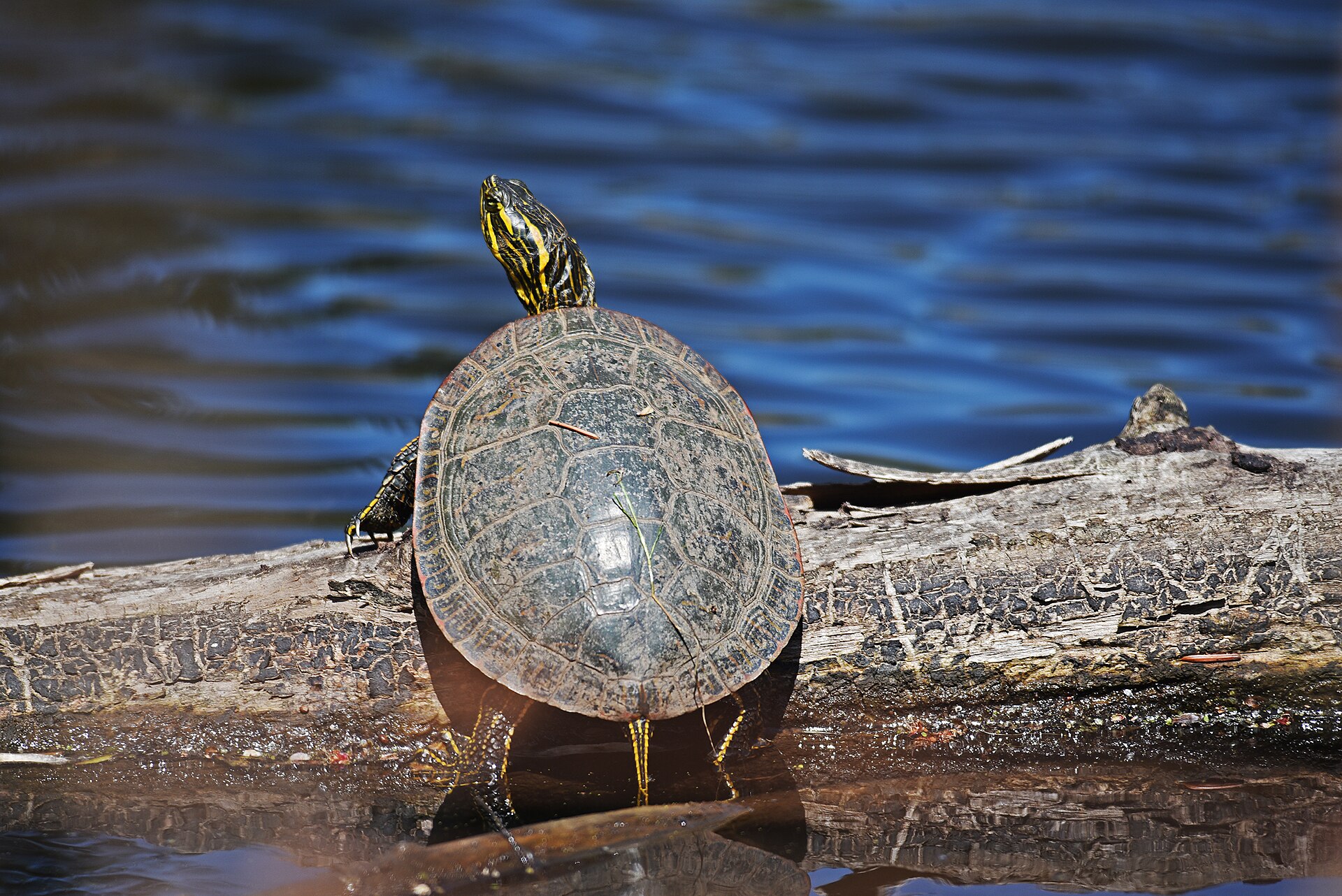
As a guideline: water around 25°C, basking spot at 30–35°C — but ideal temperatures vary by species, so check for the one you keep. Japanese winters are too cold for most pet turtles; an aquarium heater is the safe choice indoors.
Wild turtles hibernate, but hibernation in captivity is difficult to manage and can be fatal when it goes wrong. Especially for beginners, keeping the tank warm through winter is the sensible path.
Commercial turtle pellets are the backbone of the diet — nutritionally designed for the job. Around that, add animal matter (small fish, shrimp) and leafy greens or water plants for aquatic species.
Tortoises are a different world: vegetables and wild greens as the staple, with careful calcium supplementation. Diets differ radically by species — one bag of 'turtle food' does not fit all. Never feed human food.
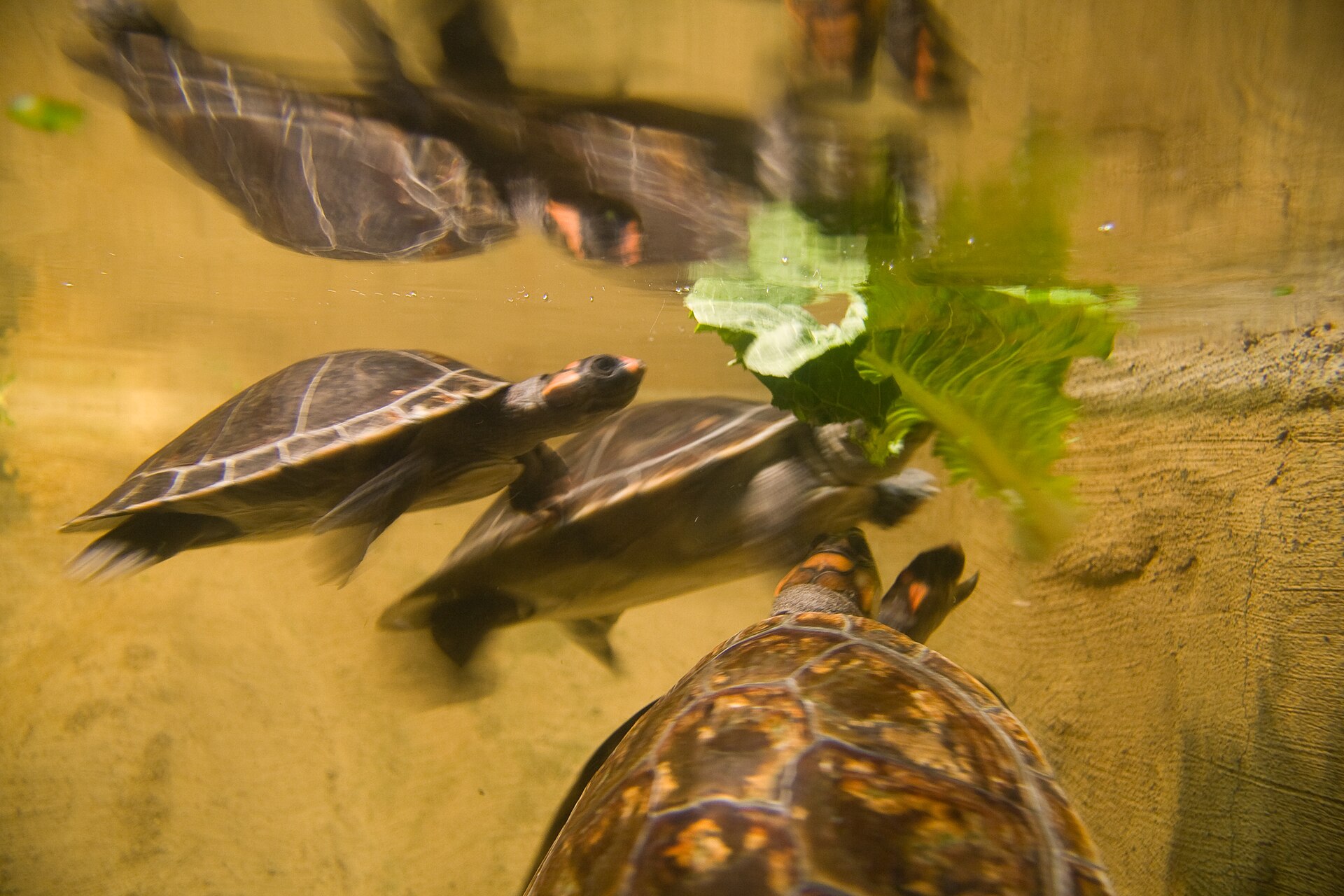
The honest answer: turtles do best alone. Even turtles kept together will nip tails in cramped tanks — if you keep several, be generous with space and hiding spots.
Fish and shrimp share the tank on borrowed time; assume they will eventually be eaten. Direct contact with dogs and cats is best avoided, both for accidents and hygiene.
Reptiles can carry Salmonella. Two house rules: always wash your hands with soap after touching the turtle or its water, and never wash tank equipment in the kitchen sink. This matters most in homes with small children or immunocompromised family members.
If something seems off — no appetite, swollen eyes, a soft or discolored shell — consult a reptile-savvy veterinarian early. Turtles hide illness well, so by the time you notice, it is time to act.
This guide covers general husbandry. For the health of an individual animal, please consult a reptile veterinarian.