Feature
Sea Turtle Nesting — The Longest Night on the Beach
From a mother's landing to the great escape of her hatchlings sixty days later: the story of one night, and what follows.
A midnight landing
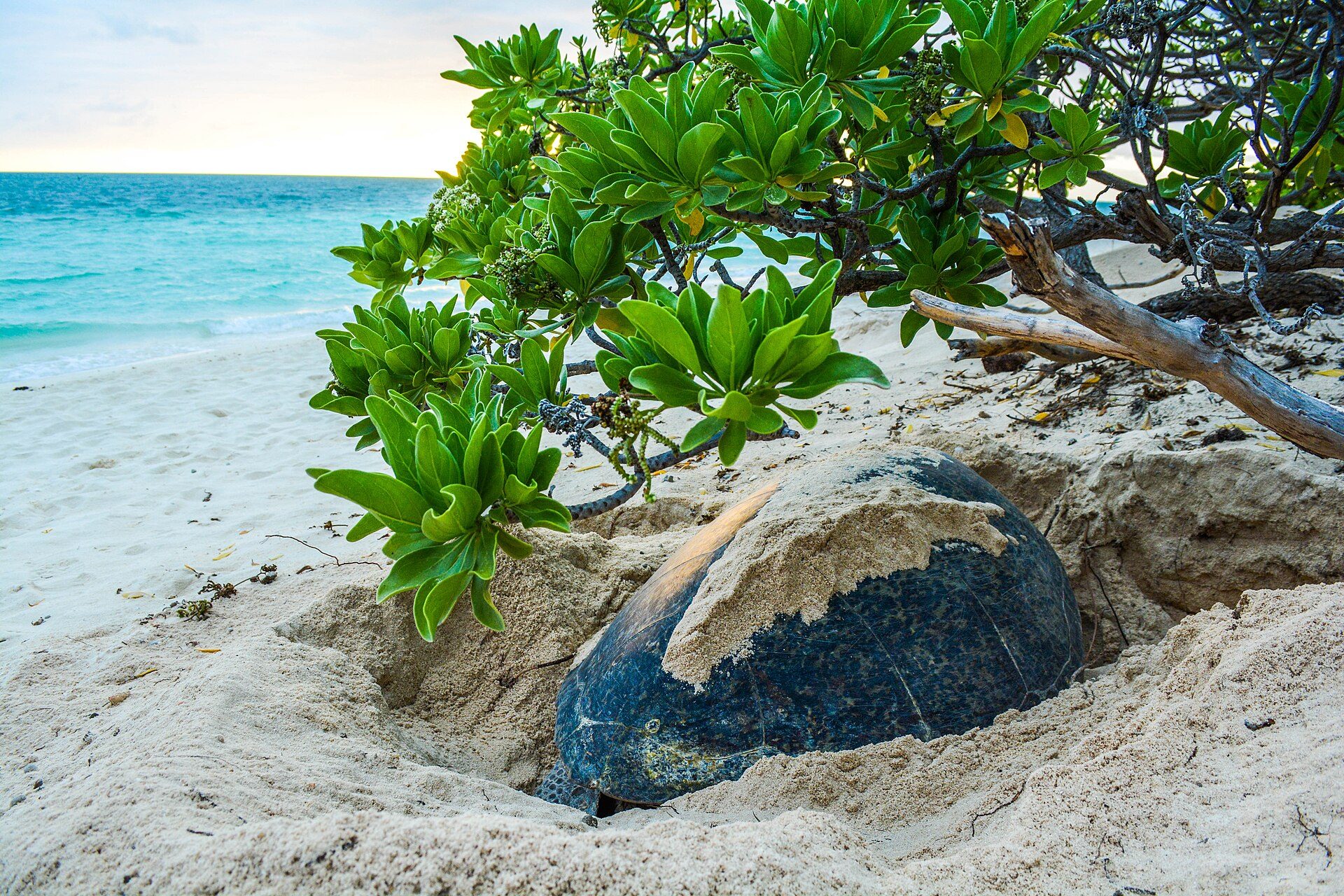
On early-summer nights, a large shadow emerges from the waves onto the moonlit sand. A mother weighing over 100 kilograms hauls herself up the beach with flippers built for the open ocean — nesting begins with sheer hard labor.
A nesting female is acutely sensitive to light and sound; a flashlight or a careless footstep can turn her back to the sea. This is why nesting beaches restrict nighttime access and lighting.
Eggs, and the truth about the tears
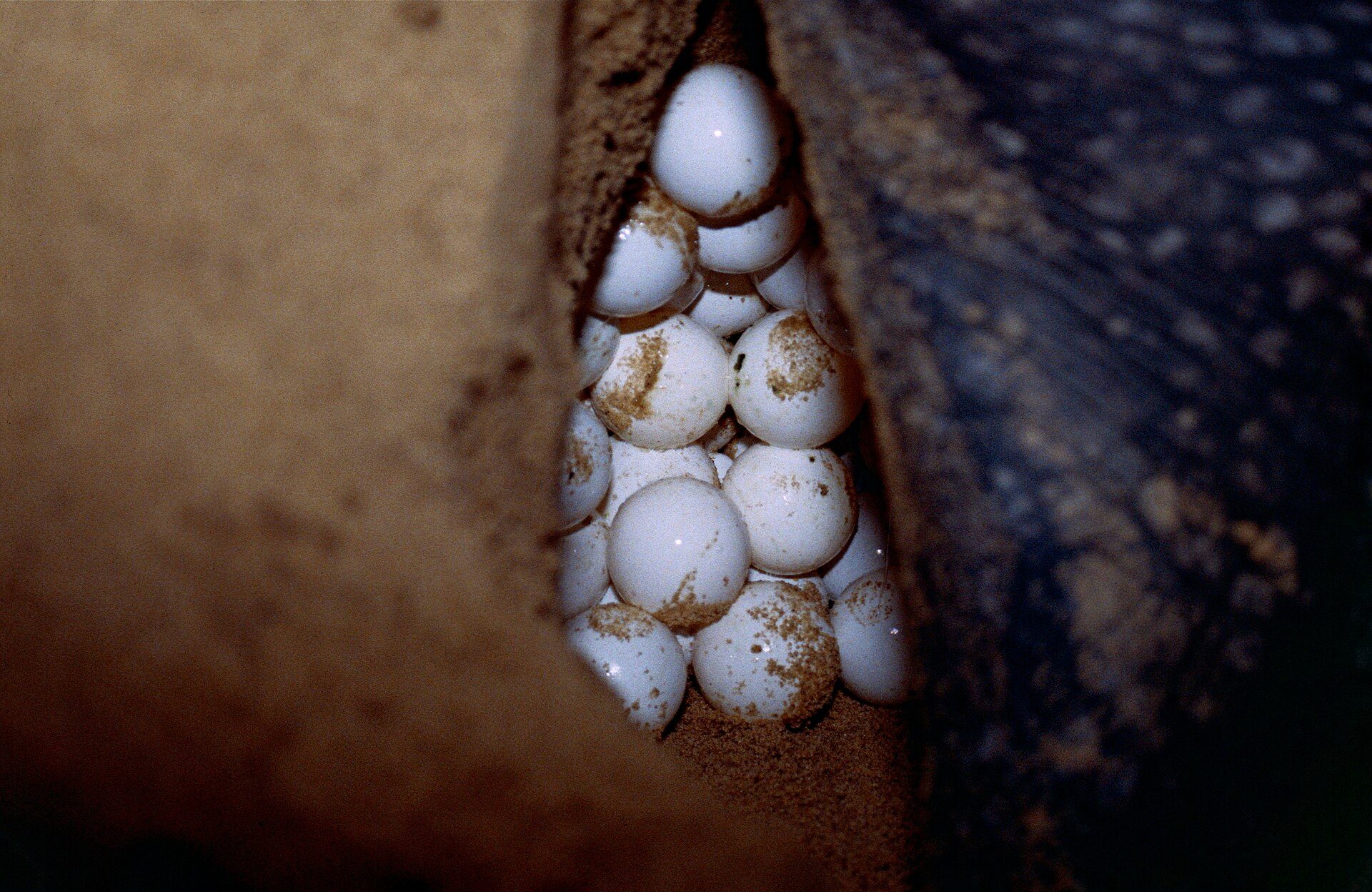
Having chosen her spot, the mother digs a flask-shaped egg chamber using only her hind flippers, then lays around a hundred ping-pong-ball eggs. She will return to nest several times in a single summer.
As she lays, tear-like drops stream from her eyes. These come from salt glands — modified tear glands flushing excess salt from her body, and protecting her eyes from sand. They are not tears of emotion. Knowing that doesn't make the sight any less moving.
The sand decides: boy or girl
A sea turtle egg has no sex when it is laid. The temperature of the sand decides: around a pivotal point of roughly 29°C, warmer nests produce mostly females, cooler nests mostly males — a system called temperature-dependent sex determination.
Sunny beaches make daughters; shaded beaches make sons. Which is why climate change worries turtle biologists: some warming rookeries are already reported to produce almost entirely female hatchlings.
The great escape, sixty days later
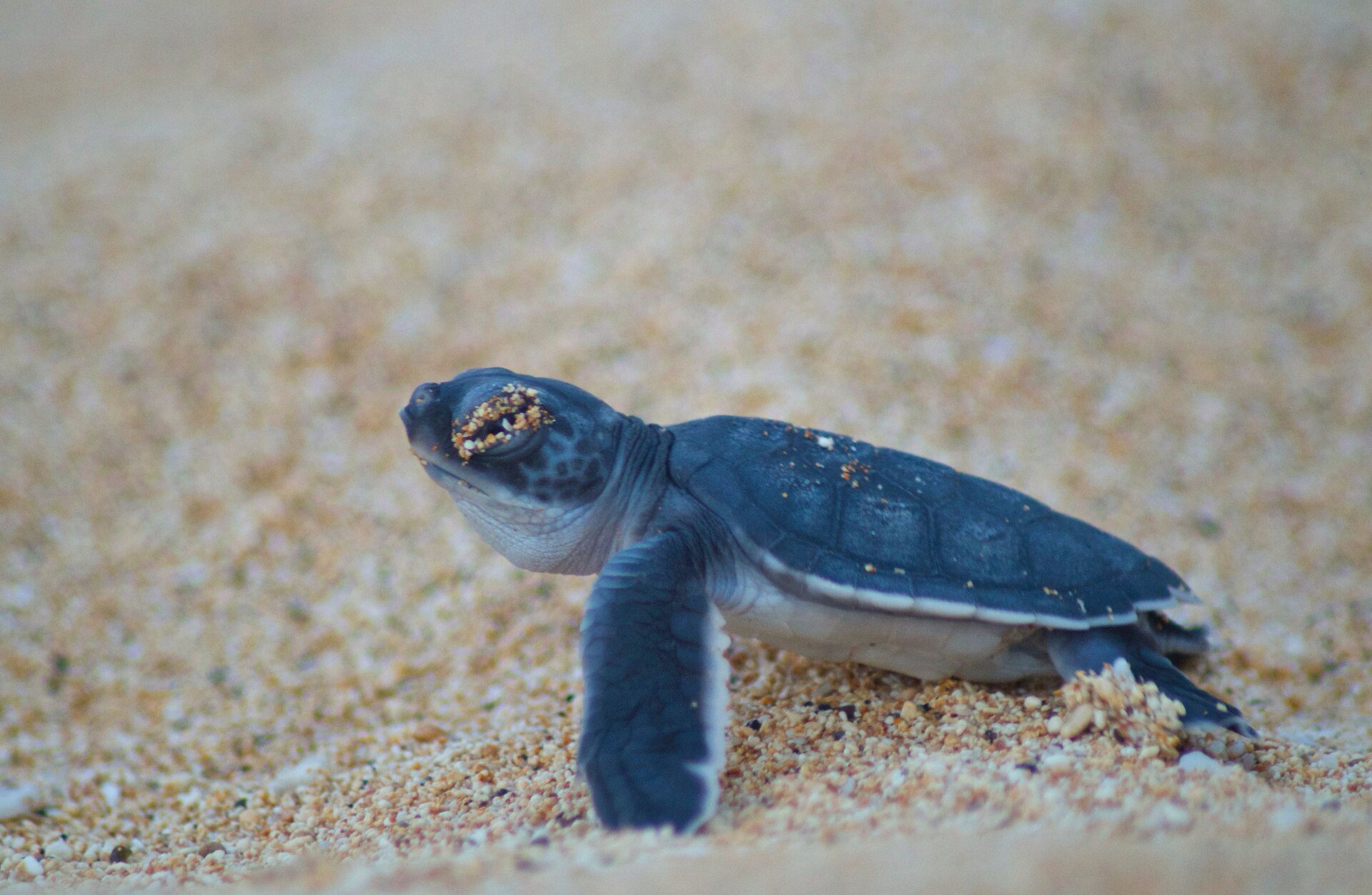
The eggs hatch after about two months — but no hatchling can dig out alone. Dozens of siblings work together, inching upward through the sand over several days, then wait for the cool of night and erupt from the nest all at once.
Guided by an instinct to head for the brightest horizon — the moonlit sea — they sprint for the water. Artificial light breaks this compass and lures hatchlings toward town instead, which is why nesting beaches manage their lights so strictly.
Even after reaching the water, perhaps one in thousands survives to adulthood. And that one surviving female will return, decades later, to the very beach where she was born.
Witnessing a nesting in Japan
Japan's nesting season runs roughly May to August. Nagata Beach on Yakushima, Ohama Beach in Minami (Tokushima) — home to the Caretta sea turtle museum — and Senri Beach in Minabe (Wakayama) all run guided observation programs.
Never wander a nesting beach on your own at night; join an official program. No lights, no flash, never cross in front of the mother, wait quietly — follow the rules, and the night will stay with you for the rest of your life.