Feature
Turtles & Castles — The Turtle-ology of Stone Walls and Moats
Castles nicknamed 'Turtle Castle,' hexagonal turtle-shell masonry, and the guardian beast of the north. Japanese castles contain more turtle than you'd think.
The castles called Kijō — 'Turtle Castle'
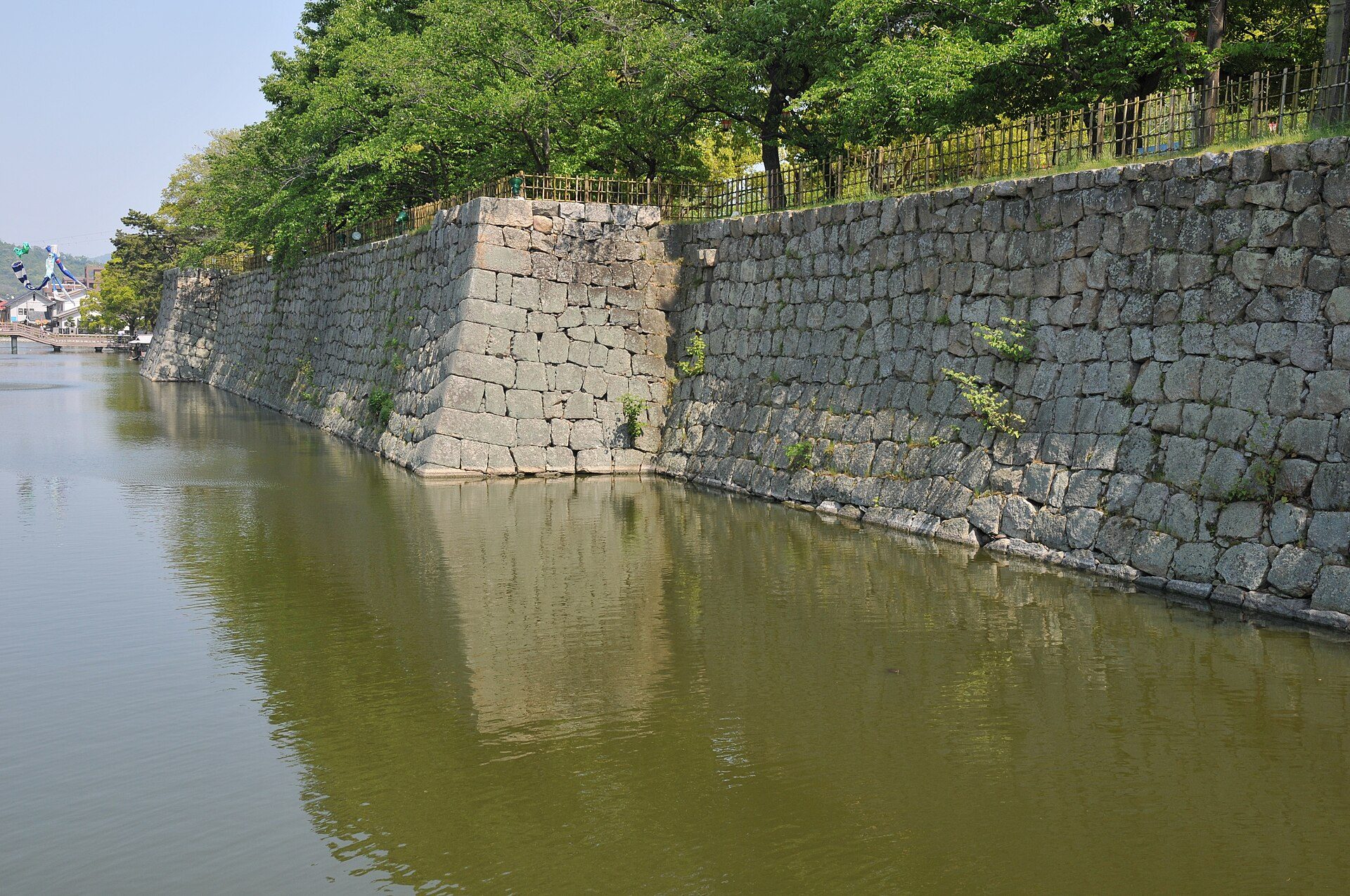
Several Japanese castles carry the affectionate nickname Kijō, 'Turtle Castle.' The most famous is Tsuchiura Castle in Ibaraki, whose moat-ringed baileys were said to look like a turtle floating on water.
Others carry the turtle in their very names: Marugame ('round turtle') Castle in Kagawa, and the two Kameyama ('turtle mountain') castles — one in Ise, one in Tanba, the latter giving the modern city of Kameoka its name. Together with the many castles nicknamed 'Dancing Crane Castle,' the crane-and-turtle pair lives on in Japan's castle names.
Why name a fortress after a turtle?
Luck. The turtle lives ten thousand years — the perfect blessing for a castle meant never to fall and a house meant to endure. A keep reflected in its water moat resembles a floating turtle, and water-rich castles especially attracted the name.
There is something fitting about naming a fortress after the slowest animal in the pond: endurance over speed, solidity over flash. The turtle was the castle-builder's philosophy in animal form.
Kikkō-zumi: turtle-shell masonry
Japanese stonemasons developed a technique called kikkō-zumi — 'turtle-shell piling' — in which stones are dressed into hexagons and fitted together like the scutes of a shell. It survives on castle walls and embankments across the country.
The same idea as the kikkō kimono pattern, applied to civil engineering. Hexagons spread force beautifully; the masons had discovered what turtle shells had known for tens of millions of years.
Genbu, guardian of the north
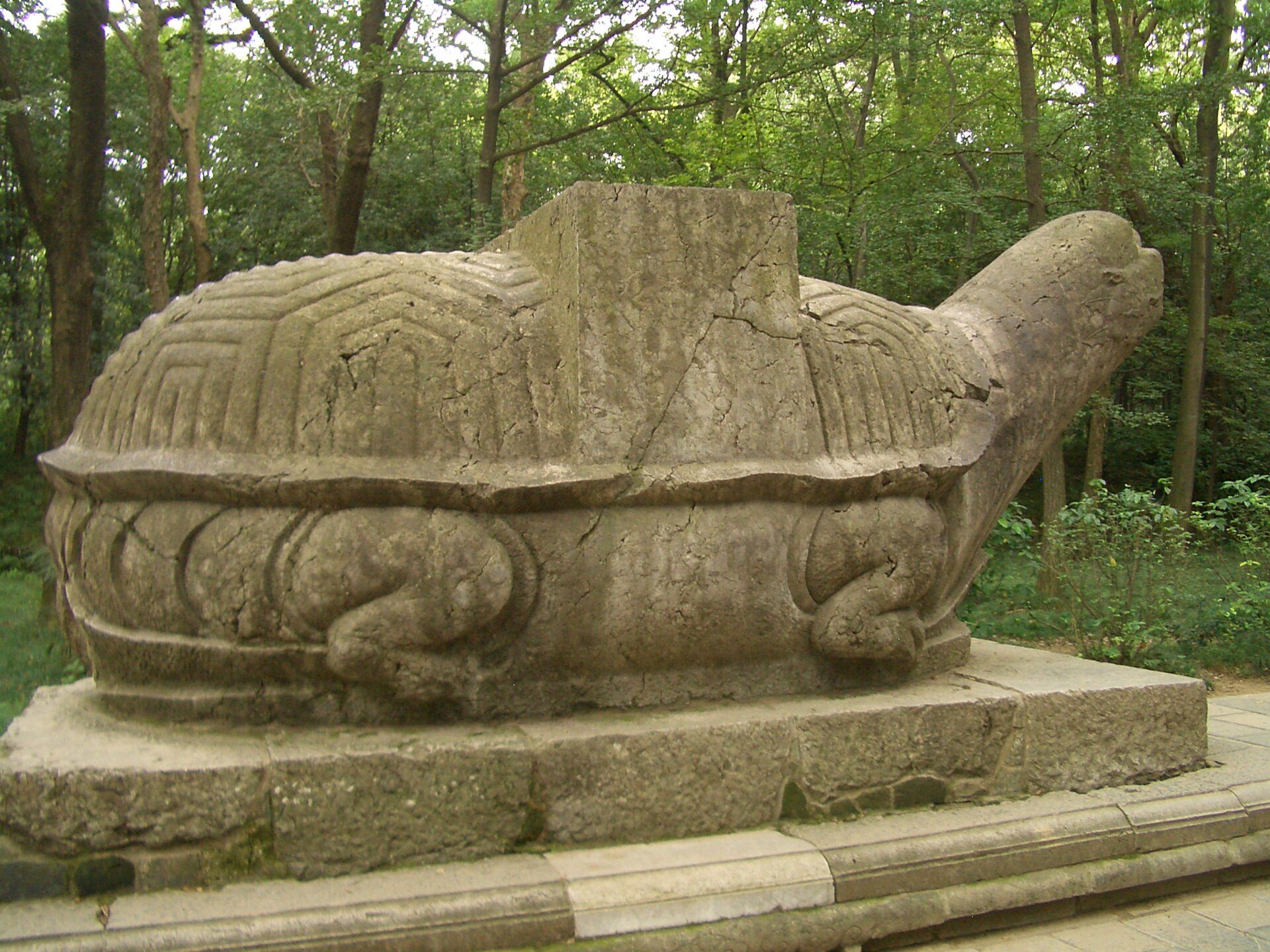
In the ancient geomantic ideal of shijin-sōō, which guided the siting of capitals and castles, the north is protected by Genbu — the Black Tortoise, a turtle entwined with a snake. Heian-kyō (Kyoto) is said to have been laid out with Mount Funaoka as its Genbu.
In other words, the turtle was built into Japanese urban planning from the start. The Genbu painted on the wall of the Kitora Tomb in Nara has been standing guard for thirteen centuries.
Moats: Japan's best turtle-watching spots
And today? Castle moats are among the best places in Japan to meet turtles, lined up basking on the stone walls — a second attraction for any castle visitor.
Most moat turtles are red-eared sliders, the legacy of released pets. If you spot one, try identifying it with our species guide — and never release a pet turtle into a moat yourself; for red-eared sliders it is against the law.
Dictionary of Turtle WordsThe moat turtle (red-eared slider)